
Grape Vine Pinot Blanc White
- Fast delivery 3-5 working days
- Track & trace
- Grow & Money back guarantee ⓘ
- Shipping cost from €6,95 per order
- Secure payment options
Our payment options
You can safely pay thru our webshop. All our payments are executed by Multisafepay and Paypal within a secure environment. We accept all major creditcards and paypal.

Grow Guarantee
Buy without worries, you have a two-month growth guarantee on all plants!

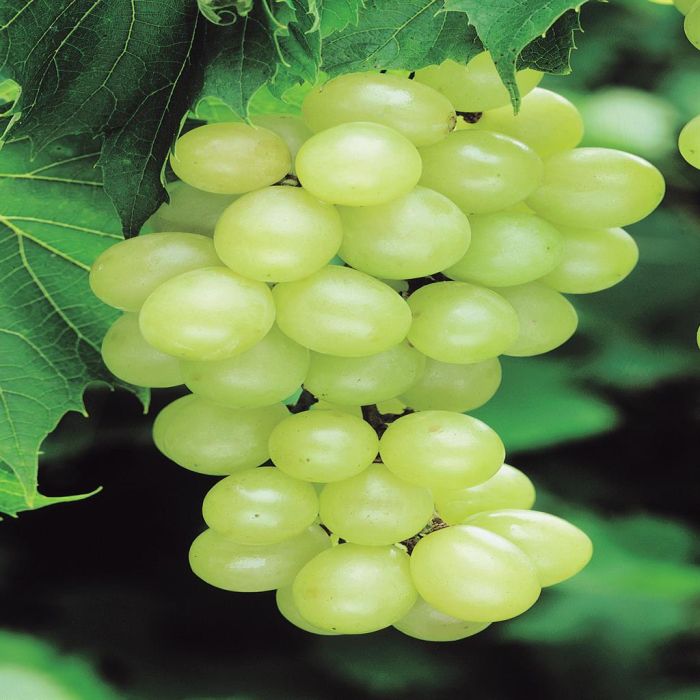
- 1 x Grape White - Vitis White Pinot Blanc 9 cm pot
| Botanical name | Vitis vinifera 'Pinot Blanc' |
|---|---|
| Free Shipping | No |
| Category | Other |
| Delivered as | Pot plant |
| Qty | 1x |
| Flowers | Yes |
| Flower period | Spring |
| Fragranr | No |
| Cutflowers | No |
| Flower colour | White |
| Fruits | Yes |
| Edible | Yes |
| Harvest time | September |
| Location | Sunny |
| Hardy | Yes |
| Groundcovering | No |
| Naturalizing | No |
| Plant spacing | 200cm |
| Plant Depth | 12cm |
| Preferred Soil | Chalky soil |
| Poisonous | No |
| Plant pot size | Ø 9cm |
| Size | 20-30cm |
How to take care of Grape Vine Pinot Blanc White
In Britain's climate our Grape vines will do best in a sunny but sheltered spot, ideally south facing with shaded or cool roots in summer. Good drainage is vital and they will benefit from soils enriched with organic matter. They dislike clay soils. They need to be trained and use a cane for support. Feed with a liquid feed one a month through the summer to help create the framework that will later support the grapes. In the second year it will need hard pruning to encourage fruiting in the third year. You can do this in winter (January-February), clip back all the side shoots to one bud from the main stems to encourage fruiting. Followed by routine mid summer trimming for best results. Always water them well in hot weather. Established plants can stay productive for about 40 years! They reach a height of 3 metres and spreads to 4.5 metres if unchecked. Colour is no guide to picking, grapes have to hang on the vine for some time to allow the sugars to form so you better test them prior to clipping the bunches off in October. The plant is deciduous so don’t be alarmed if it drops its leaves over the winter.
For best results: Prepare the bed prior to planting. The soil should be dug as far down as you can and incorporate lots of well rotte manure, its important that it should be well rotted because fresh manure will burn the vines roots.
Grow Guarantee
Buy without worries, you have a two-month growth guarantee on all plants!